
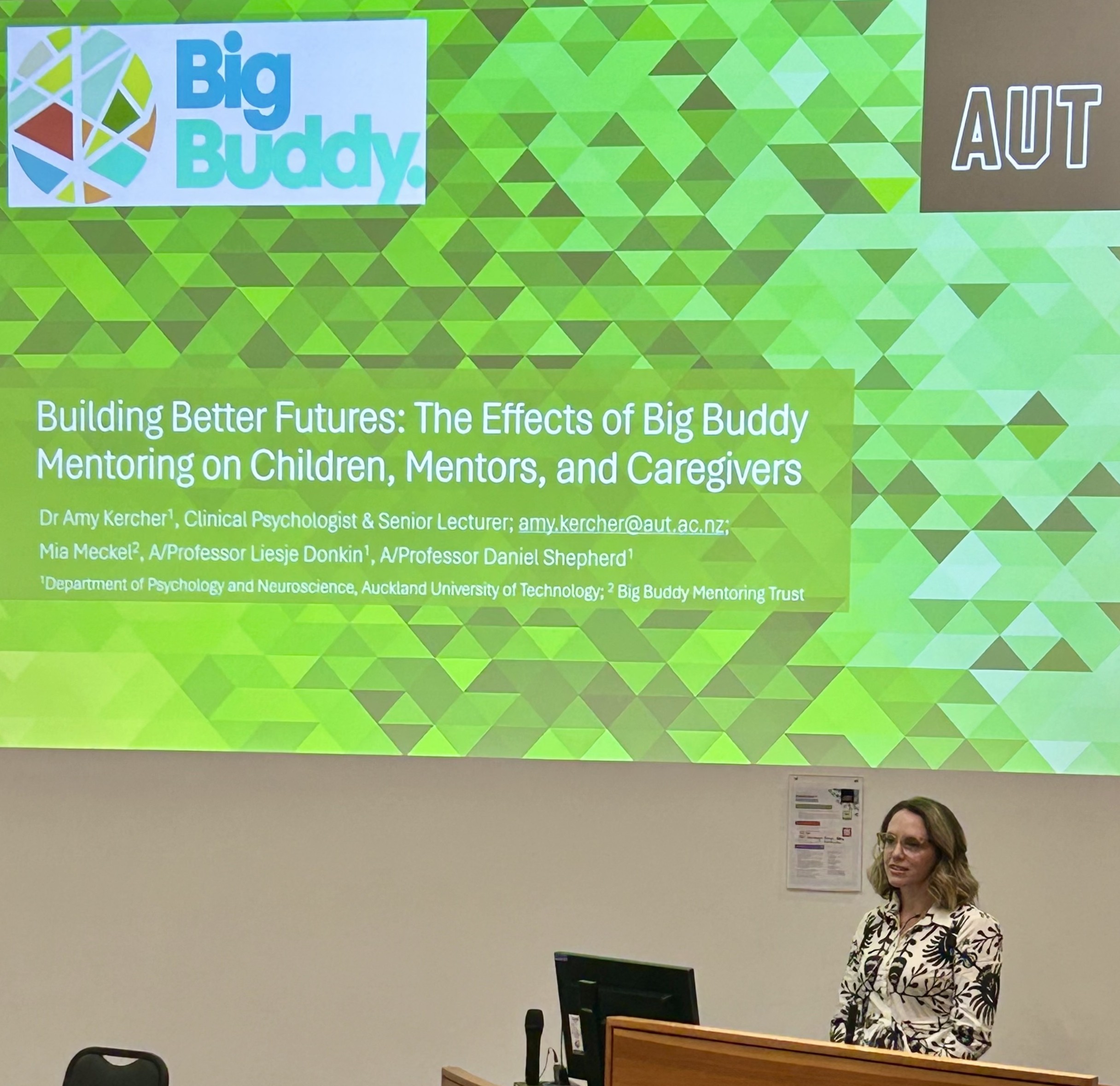
On Friday 20 February, leaders from across the child and youth sector gathered at the Child and Youth Health Symposium, hosted by the AUT Child & Youth Health Research Centre. The event brought together research, practice, and lived experience to better understand what truly supports positive outcomes for young people in Aotearoa.
A highlight was seeing Dr Amy Kercher, Clinical Psychologist and Senior Lecturer at AUT present ‘Building Better Futures: The Effects of Big Buddy Mentoring on Children, Mentors, and Caregivers’.
Dr Kercher shared the findings from a pro-bono research partnership between AUT and Big Buddy. The study set out to better understand the real impact of our one-to-one mentoring programme.
For over 27 years, Big Buddy has matched boys without fathers in their lives with positive male role models, facilitating more than 1,270 mentoring relationships across New Zealand. While we’ve always seen the difference these relationships make, this research gives us clear evidence to back that up.
Key Findings at a Glance
- Boys matched with a Big Buddy showed fewer behavioural and emotional challenges and stronger social skills
- Caregivers reported feeling less stressed and better supported
- Mentors experienced a boost in their own wellbeing
- Stronger, longer mentoring relationships = better outcomes for boys
- Boys in the programme had better overall outcomes than those still waiting for a mentor
The message was clear:
Mentoring makes a real difference.
What the Research Found
The study reviewed insights to the boys before and after they were matched, as well as comparing those who currently have a Big Buddy with those still waiting to be matched. This was supported with feedback from caregivers and mentors.
For boys, the changes were both noticeable and meaningful:
- Fewer emotional and behavioural challenges (like anxiety, acting out, and difficulties with peers)
- Improved social skills, including sharing, helping others, and building friendships
- Overall better outcomes than boys who are still waiting for a mentor
To put that into context, caregivers reported a clear drop in overall difficulties their child was experiencing after joining Big Buddy, alongside a noticeable increase in positive social behaviours like cooperation and kindness.
The Power of Consistent Relationships
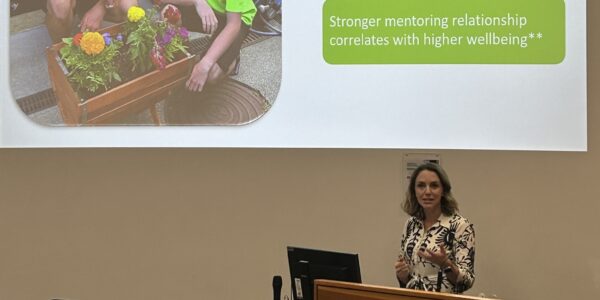
One of the strongest messages from the research is something we’ve always known: it’s the relationship that makes the difference.
Boys who had stronger connections with their Big Buddy showed more positive social behaviours, and those who had been matched for longer tended to show even greater improvements.
This reinforces why Big Buddy focuses on long-term, consistent matches. Real change doesn’t happen overnight – it grows through trust, time, and showing up.
A Positive Impact on Whānau
The benefits of mentoring doesn’t stop with the boys.
Caregivers told us they felt better supported, less stressed, and more able to cope after their child was matched with a mentor. Many reported noticeable improvements in their OWN wellbeing, as well as a reduction in the day-to-day pressures of parenting.
Caregivers whose child had a Big Buddy also reported feeling better overall than those still waiting, highlighting the wider impact the programme can have on families.
Mentors Benefit Too
Another important finding is that mentoring doesn’t just support the child – it also has a positive impact on the mentor.
Men involved in the programme reported feeling better in themselves after becoming a Big Buddy. Those who built strong, meaningful relationships with their Little Buddy experienced the greatest sense of wellbeing and connection .
It’s a powerful reminder that mentoring is a two-way relationship, one that benefits everyone involved.
A Shared Commitment to Evidence
This research, conducted by AUT, led by Dr Amy Kercher, supported by A/Professor Liesje Donkin, A/Professor Daniel Shepherd and Mia Meckel (former Big Buddy staff member) marks an important step in building a stronger evidence base for mentoring in Aotearoa.
While the study was relatively small, the consistency of the results across boys, caregivers, and mentors gives us confidence in what we see every day: that positive male role models and strong relationships can change lives. By capturing multiple perspectives and focusing on relational impact, it strengthens the case for programmes that prioritise consistency, connection, and trust.
Continuing the Conversation
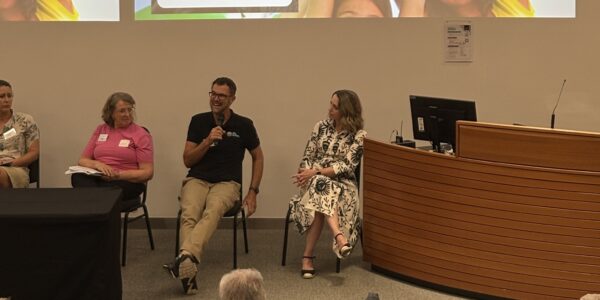
Following the presentation, our Co-CEO Steve Sobota joined a panel discussion, where he answered questions about the Big Buddy programme and shared insights into the matching process, the impact stories and future development.
It was a valuable opportunity to connect research with real-world experience and to highlight the role that community organisations like ours play in supporting young people.
Looking Ahead
As demand for volunteer Big Buddy continues to grow, this research helps strengthen the case for expanding access to mentoring – so more boys and families can benefit.
Big Buddy is about connection. And now, we have the evidence to show just how powerful that connection can be.
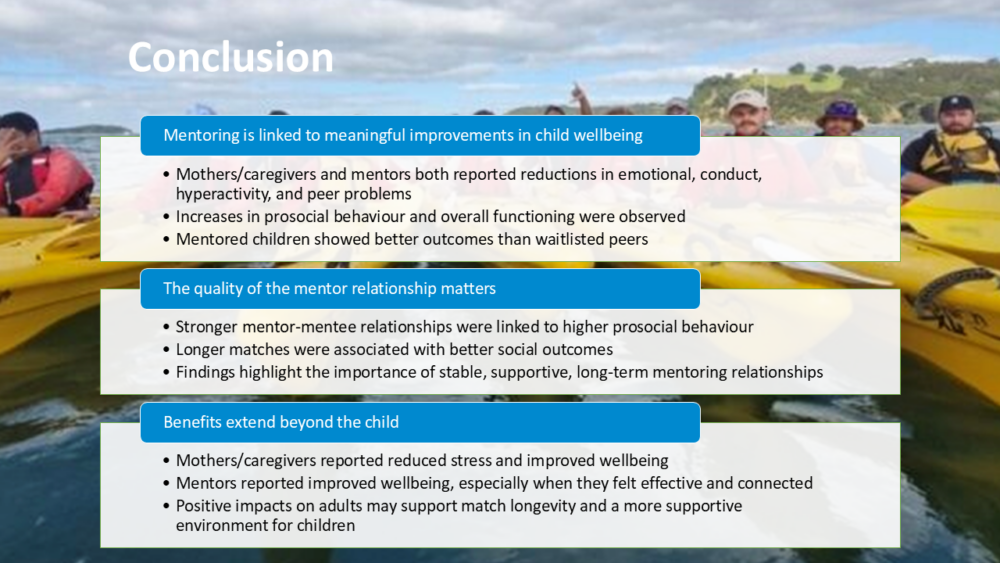
Excerpt from Dr Amy Kercher’s presentation – Building Better Futures:
The Effects of Big Buddy Mentoring on Children, Mentors and Caregivers.
