
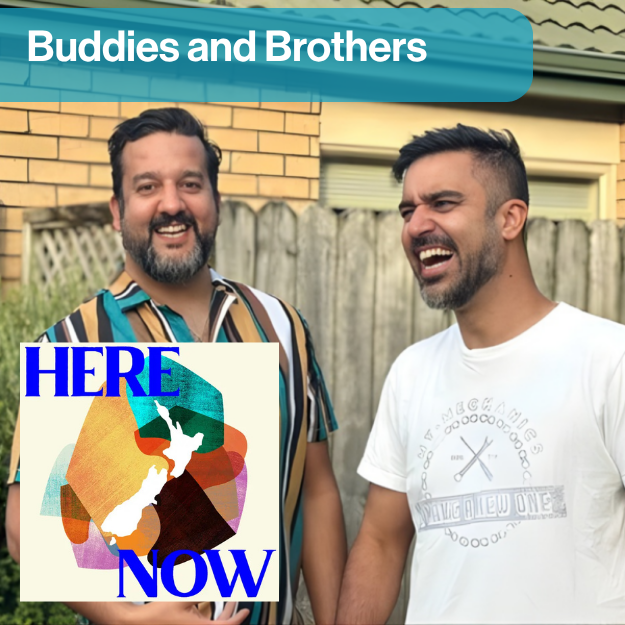
For brothers Tapan and Donny Mukerji, becoming Big Buddies wasn’t about changing a child’s life. It was about passing on something they were fortunate enough to receive themselves: the guidance, support, and steady presence of a father.
When Tapan Mukerji looks back on his childhood in India, some of his memories seem extraordinary.
His father served in the Indian Armed Forces, which meant growing up on defence bases, travelling in army vehicles, and attending schools where armed soldiers were sometimes a familiar sight.
“Back then as kids, we didn’t realise what we had,” Tapan says. “Only now when I look back, I go, that was awesome.”
But while those experiences stand out, they’re not what he values most.
Instead, it’s the everyday moments that remain closest to his heart.
“The ordinary memories and occurrences of our childhood with our parents, with our father, and the time we still spend with him today,” he says. “I can’t even imagine what the impact of not having that would be in my life today.”
It’s a powerful reflection—and one that would eventually lead both brothers to Big Buddy.
A Decision That Started with a LinkedIn Post
About a year ago, Tapan was sitting in a café scrolling through LinkedIn when he came across an advertisement for Big Buddy.
“It said something about spending three hours with a kid,” he recalls. “I was thinking, that’s a lot of commitment.”
But the more he looked into the programme, the more he realised mentoring didn’t require him to reinvent his life. It simply meant sharing parts of it with someone who could benefit from a positive male role model.
“It’s not that much more effort to include them in your daily life,” he says. “If you’re already hanging out with kids or going for walks or doing activities, picking up a friend or a Little Buddy on the way is not that hard.”
Before long, his brother Donny was interested too.
Unlike Tapan, who has two children, Donny and his wife Jenny don’t have children of their own. They had often discussed ways they could contribute to the next generation.
“My wife Jenny and I don’t have kids,” Donny says. “We got thinking about what are some of the ways that we can help foster and contribute to the next generation.”
When he heard Tapan had signed up with Big Buddy, the decision became surprisingly simple.
“My first reaction was, ‘What? You haven’t got enough fatherly duties with your two kids?'”
But after hearing more about the programme, Donny found himself asking a different question.
“If he’s got two kids and he’s participating in this programme, how can I not?”
“There was really no reason for me not to. It resonated instantly. I thought, I must do it. I have to do it.”
It’s Not About Grand Adventures
For many people considering becoming a mentor, one concern is whether they’ll have enough exciting activities to keep a child engaged.
Tapan says he had the same misconception.
“When we first started, I was wondering, what do I do with him every weekend? Do I take him kayaking one weekend? Rock climbing the next?”
Then he remembered something important.
“I don’t do that with my own kids.”
Instead, he began doing exactly what he would normally do at home—visiting the park, kicking a ball around, having a barbecue, listening to music and simply spending time together.
That’s also how he discovered one of his Little Buddy’s hidden talents.
“I didn’t realise how good he was at music,” Tapan says. “He’d never played drums before or guitar before, but he could just sit down and play by ear.”
As a keen musician himself, Tapan wasn’t surprised they connected.
“I’ve got three drum kits in the house,” he laughs. “I’m probably not even the best drummer in the house if you include him.”
For both brothers, mentoring has taught them that meaningful relationships aren’t built through extraordinary experiences.
They’re built through ordinary moments.
“You don’t have to curate special moments,” Donny says. “Big Buddy told us from the start: we’re not looking for saints. We’re just looking for normal people.”
Then he adds another important quality.
“And consistent people.”
Story transcribed from Interview 8th June : Being Big Buddy episode of Here Now | RNZ
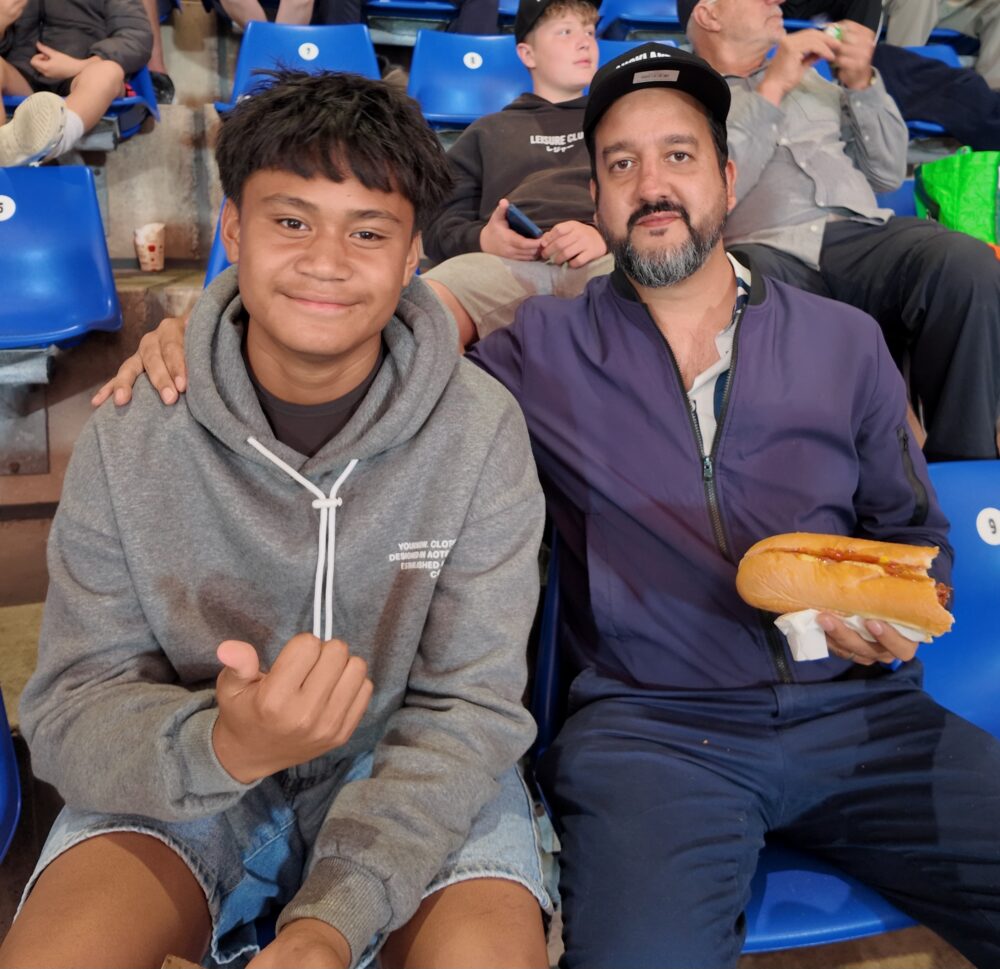
Jayden and Tapan at AFC game
Showing Up Matters
Consistency is something both brothers speak passionately about.
Neither pretends that every weekend is easy.
“There are definitely times when it’s the last thing I feel like doing,” Donny admits.
But he believes that’s exactly why showing up matters.
“Some of these Little Buddies are probably still dealing with the fact that their actual fathers aren’t showing the same level of interest in their lives. We have to be consistent.”
Tapan shares a similar view.
“The whole point of this is that you’re supporting a child without an active father in their life. You can’t just cancel on them.”
He compares the commitment to going to the gym.
“Sometimes you’re tired and don’t feel like it. But afterwards you know it was exactly the right thing to do.”
The reality of being a Big Buddy is often much simpler than people imagine.
Sometimes they play video games. Sometimes they cook burgers. Sometimes they sit in the car on the way to an activity.
Those quiet, everyday moments often become the most valuable.
“That’s probably 90 per cent of it,” Tapan says. “Just hanging out.”
The Power of a Trusted Adult
Big Buddy volunteers aren’t counsellors, therapists or teachers.
Their role is simply to be a trusted friend and positive role model.
Yet over time, that steady presence can have a remarkable impact.
For Donny, the changes weren’t immediately obvious.
“In the beginning, I wasn’t sure whether the time I was spending was making a difference,” he says.
The relationship developed slowly.
Conversations would happen naturally—often in the car while travelling somewhere or during everyday activities together.
His Little Buddy would share challenges he was facing, ask questions and seek a different perspective. Over time, trust began to grow.
Eventually, Donny started noticing changes.
“He’s more generous. He smiles more. He’s more open,” he says.
“It’s like watching him blossom into a young man.”
Tapan has observed similar growth in his own Little Buddy.
“I’ve heard he’s become a bit more responsible and a bit calmer,” he says.
To Tapan, that suggests something deeper.
“Maybe he’s just a bit more sure of himself. Maybe he’s got some validation. Someone helping him work out whether he’s on the right track.”
While those changes may be difficult to measure, both brothers agree that the impact is real.
“It takes time,” Donny says. “But rest assured, the time you spend with them is having a huge positive impact.”
Answering a Growing Need
Across New Zealand, thousands of boys are growing up without a positive father figure in their lives.
For Donny, that’s one of the reasons programmes like Big Buddy are so important.
“Young people are crying out for male role models,” he says.
“When they can’t find that in their families or communities, sometimes they go looking elsewhere—and not always in the right places.”
Every young person, he believes, needs someone they can look up to.
“Someone you can talk to. Someone who can give you a different perspective. Someone who simply shows up.”
That’s exactly what Big Buddy aims to provide.
For more than 25 years, the organisation has matched boys with caring, reliable adult male mentors who can offer friendship, encouragement and consistency during some of the most important years of their lives.
Passing It On
The Mukerji brothers didn’t become Big Buddies because they had all the answers.
They didn’t join because they had endless free time or special expertise.
They joined because they understood the value of having someone there.
Someone who listens.
Someone who cares.
Someone who shows up.
What they received from their own father all those years ago is now being passed on to another generation of boys.
And if there’s one thing both Tapan and Donny have learned, it’s that changing a life doesn’t always require something extraordinary.
Sometimes, it starts with something as simple as being there.
Week after week.
Conversation after conversation.
Showing a young person that they matter.
